English| EUR
Suggested for you
More currencies
Choose a language
Canyoning in Zillertal draws thousands of first-timers each summer—most arrive wondering whether the slides, jumps, and cold water will push them past their limits. The answer depends less on the sport itself than on which route you choose and how your guide adapts to your group. This page breaks down what you'll encounter, which fears are founded, and how to pick a tour that matches your threshold.
Quick answer
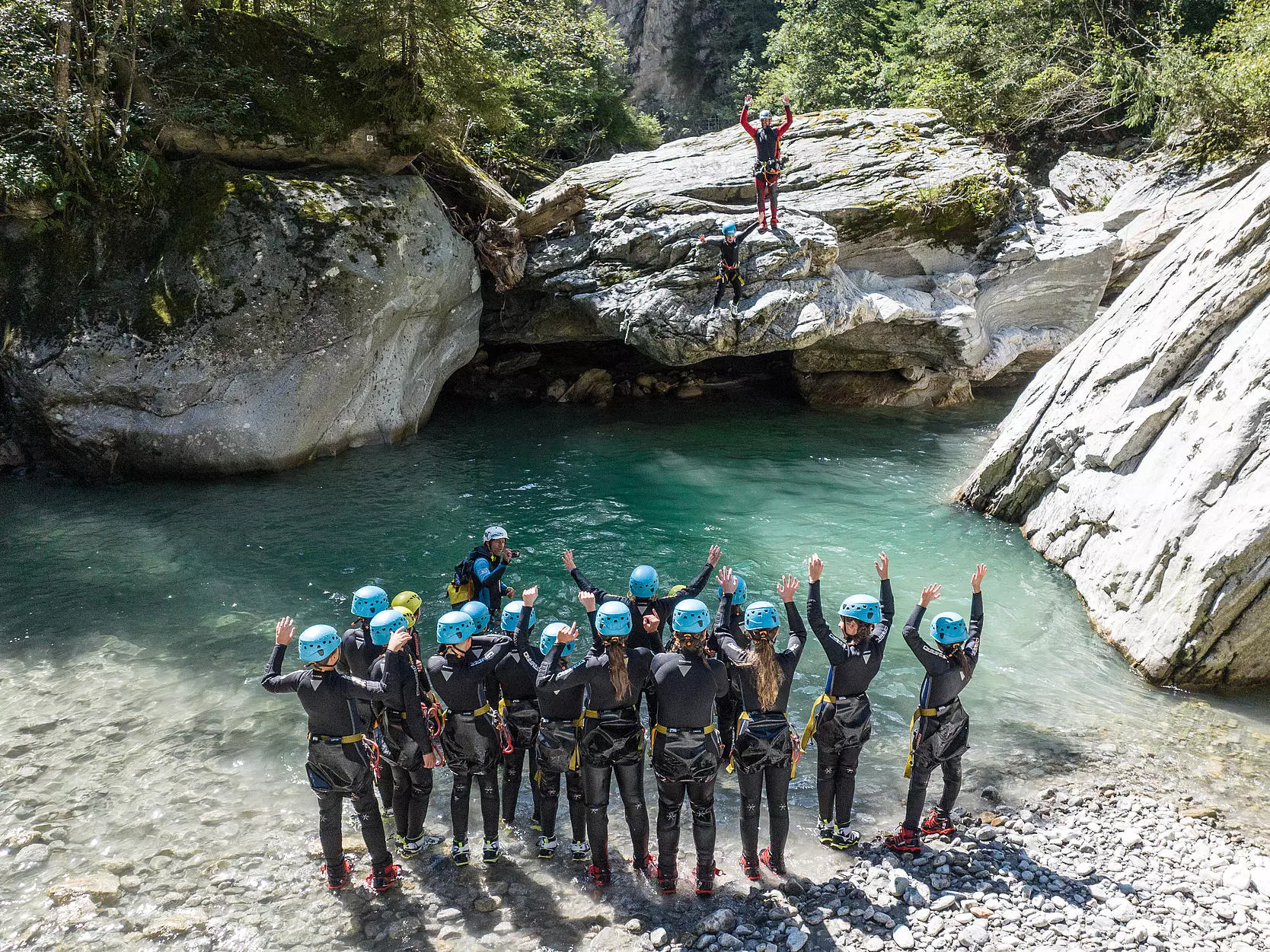
Canyoning in Zillertal is not inherently scary for most participants, but it does involve controlled exposure to heights, cold water, and unfamiliar terrain. Entry-level family tours keep maximum jump heights below three meters, allow bypasses for every obstacle, and pair small groups with certified guides who adjust pacing to individual comfort. Fear of heights or cold water is normal—routes are graded specifically to match experience level, and no jump is mandatory.
Zillertal's canyoning routes carve through limestone gorges fed by Alpine meltwater, where water temperatures hold steady between eight and twelve degrees Celsius even in July. That cold is the first tangible threshold—most first-timers find the initial plunge more bracing than any jump that follows. The question of whether canyoning feels scary hinges on three variables: the grade of the route, the size of your group, and your guide's willingness to offer alternative lines. Family-friendly tours in the Finkenberg area—like the entry-level descent that departs from Hochsteg 595—cap jump heights at two to three meters, provide walk-around options for every rappel, and move at a pace set by the least confident member. Intermediate routes introduce six-meter drops and longer swims through narrow channels where rock walls close to shoulder width. Advanced canyons demand technical rappels on wet rope and commitment to moves that cannot be undone once started. Certified guides carry rescue equipment and train specifically in managing panicked participants, but their primary tool is route selection. Before you book, operators ask about swimming ability, comfort with heights, and prior outdoor experience—not to screen you out, but to assign you to a canyon that matches your threshold. The sport's risk profile sits below rock climbing and above hiking; the Austrian Alpine Club records fewer than five serious incidents per ten thousand canyon descents, most involving twisted ankles rather than falls. The cold remains the least negotiable element. A five-millimeter wetsuit blunts the shock but does not eliminate it, and most routes involve at least thirty minutes of continuous immersion. Guides schedule descents for late morning to benefit from maximum sunlight in the gorge, but the water temperature itself never climbs. If cold intolerance is your concern, that matters more than fear of heights—every jump can be bypassed, but the water cannot.
“The sport's risk profile sits below rock climbing and above hiking, with route grading designed to match your threshold rather than push past it.”
Canyoning often appears intimidating due to the rugged nature of gorge environments and the presence of moving water. Understanding the professional safety standards and equipment usage helps distinguish perceived risk from actual operational procedures.
MythCanyoning is only for extreme athletes
FactGuided tours are designed for various skill levels, including entry-level options for families and beginners.
MythYou must be an expert swimmer to participate
FactGuides provide specialized buoyancy aids, and tours are conducted in conditions appropriate for the group's swimming ability.
MythHeight is a barrier for everyone
FactProfessional guides manage all descents using ropes and technical systems, allowing participants to navigate heights under controlled conditions.
MythEquipment is uncomfortable and restricts movement
FactModern canyoning gear is specifically designed for mobility and thermal protection in alpine water temperatures.
A standard Zillertal canyoning tour follows a structured progression designed to build confidence before any technical descent. The entire sequence—gear fitting, briefing, practice elements, and guided rappels—takes three to four hours.
Meet your guide at the base, where you'll be fitted with a wetsuit, harness, and helmet. Most first-timers choose a size too large; the neoprene should feel snug but allow full arm rotation.
Your guide demonstrates body position for jumps, hand signals, and how to self-arrest in moving water. This ten-minute briefing covers the exact techniques you'll use in the gorge.
Before any rappel, you'll complete two or three jumps from waist- to chest-height platforms into deep, still water. These controlled repetitions let you calibrate your entry and prove the depth.
Your guide secures each rappel anchor and talks you through foot placement and brake-hand pressure. You control your own descent speed; the guide remains below, never above.
Between rappel stations, you'll float through smooth chutes and swim across pools with minimal current. The wetsuit provides buoyancy, and you're never more than two body-lengths from a ledge.
After the final pool, a ten-minute walk on a marked path returns you to the shuttle point. Guides collect all technical gear before you leave the gorge.
The best arrival window for canyoning in Zillertal is 09:00–12:00. Arriving during this period helps minimize stress by avoiding midday traffic and ensuring optimal daylight for navigating the gorge.
Warm, stable, 18-25°C
Summer provides the most reliable conditions for entry-level tours.
Cooler, variable, 10-20°C
Lower water levels can make some technical sections feel more manageable.
—
Arriving early reduces perceived pressure and allows for a more focused experience with your guide.
Verdict: For the most relaxed experience, target a weekday morning arrival between 09:00 and 12:00 during the months of June or September.
The canyoning base in Zillertal operates daily throughout the week. Visitors can schedule their tours within the following hours.
The canyoning meeting point is located at Hochsteg 595 in Finkenberg, situated within the Zillertal valley. Most visitors reach the facility by car or regional transport connections via Mayrhofen.
B169 Zillertalstraße to Mayrhofen, then follow signs to Finkenberg
Line 4104 from Mayrhofen Bahnhof to Finkenberg Teufelsbrücke
From Mayrhofen station to Hochsteg 595
Plan your journey to arrive between 09:00 and 12:00. This window helps you avoid midday traffic congestion in the Zillertal and ensures you have sufficient daylight for your gorge navigation.
Everything you need to know about is canyoning scary
Many participants find that is canyoning scary at first, but professional guides ensure safety through proper equipment and instructions. The initial nervousness typically fades once you begin navigating the water and rock features. Most people discover that the controlled environment makes the adventure manageable and enjoyable.
When considering is canyoning scary, remember that personal comfort levels vary significantly based on individual experience with outdoor activities. Engaging with experienced providers in Finkenberg helps mitigate anxiety by focusing on skill-appropriate routes. Assessing your physical readiness and willingness to try rappelling is a great way to prepare.
The entry-level family canyoning tour is designed to be accessible rather than intimidating, providing a gentle introduction to the sport. While some still wonder if is canyoning scary in this setting, the focus remains on fun and engagement with the natural environment. It serves as a perfect starting point for those looking to experience the Zillertal gorges without excessive intensity.
Feelings of vertigo are natural, and many who ask is canyoning scary are actually concerned about cliff jumps or rappelling from heights. Guides provide support for every descent, ensuring you remain within your comfort zone while learning to navigate the rocky terrain. You are never forced to perform maneuvers that feel beyond your capabilities.
Professional guides prioritize safety, so if you decide a specific feature is not for you, they can offer alternatives or assist you in bypassing it. This flexibility helps address the root of why is canyoning scary for some, allowing you to focus on the overall experience. Communication with your guide is the most effective way to manage your experience during the descent.
Children often adapt quickly to the water and climbing, making the activity less daunting than adults might expect. While parents may worry if is canyoning scary for their little ones, the guided nature of these trips ensures that safety protocols and wetsuits keep everyone secure. It is a shared adventure that builds confidence in the outdoors.